How Does a Period Underwear Manufacturer Ensure Product Quality?
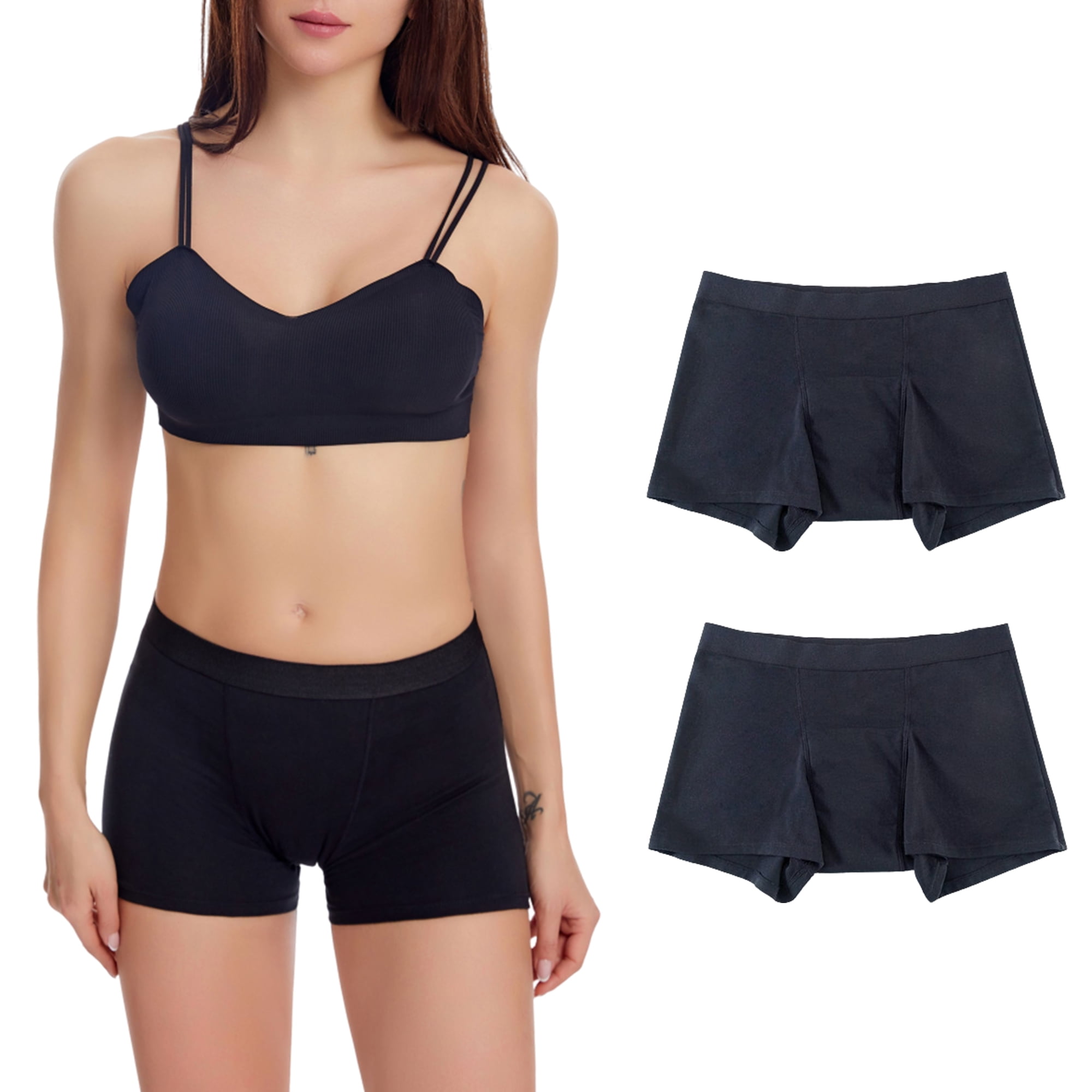
A period underwear manufacturer ensures product quality by controlling materials, absorbency, leak resistance, sewing, fit, wash durability, chemical safety, and batch consistency from development through shipment. A typical product may contain 3–5 functional layers, while production teams can check dozens of material and garment specifications. Testing may include absorbency in milliliters, hydrostatic resistance, dimensional change after 5–50 wash cycles, colorfastness, seam strength, and restricted substances. Quality is measured at material, process, and finished-garment level, because a pair that passes visual inspection can still leak, shrink, delaminate, or lose absorbency after repeated washing.
Period underwear is more difficult to manufacture consistently than standard underwear because the gusset has several jobs at once. A common construction combines a skin-contact layer, transfer layer, absorbent textile, liquid-resistant membrane, and outer fabric, producing roughly 3–5 functional layers in one area. Each material reacts differently to liquid, heat, stretching, detergent, and sewing pressure, so manufacturers normally define measurable specifications before bulk cutting begins.
Material control starts with fiber content, fabric weight, width, thickness, stretch, recovery, shrinkage, color, and functional performance. A fabric specified at 180 g/m², for example, should not be treated as interchangeable with a visually similar 150 g/m² fabric. A 10% change in weight can alter hand feel, drying time, opacity, stretch behavior, and the way the material moves through sewing equipment.
That is why incoming inspection is performed before materials enter production. Inspectors can compare roll width and weight with the approved specification, check shade against the approved standard, and record holes, stains, knitting faults, coating damage, or inconsistent lamination. If 100 rolls arrive from several dye lots, lot identification also prevents noticeably different shades from being cut into the same garment.
A functional textile can look acceptable and still perform differently after washing. Visual inspection therefore cannot replace measured testing.
Once incoming materials are accepted, absorbency becomes one of the most closely controlled product properties. Manufacturers can record how many milliliters a defined gusset area absorbs, how quickly liquid enters the structure, how widely it spreads, and how much returns to the surface under pressure. Testing 5 production specimens instead of relying on one sample gives QC teams a better view of within-batch consistency.
Test conditions must also stay consistent. A result obtained with 30 mL of test liquid cannot be fairly compared with one obtained using 50 mL under different pressure or application rates. Sample dimensions, conditioning time, liquid composition, temperature, application rate, waiting time, and weighing procedure should be written into the test method so development and bulk-production results remain comparable.
| QC area | Typical measurement | What the manufacturer checks |
|---|---|---|
| Absorbency | mL per defined sample | Capacity and consistency |
| Absorption speed | seconds/minutes | How rapidly liquid enters layers |
| Rewet | mass or defined rating | Moisture returning to the surface |
| Dimensional stability | % change | Shrinkage after laundering |
| Colorfastness | rating scale | Color change and staining |
| Seam quality | strength/extension | Failure during stretching |
| Barrier performance | pressure/test condition | Resistance to liquid penetration |
Absorbency alone does not prevent leaks, which brings QC to the barrier layer and garment construction. Liquid may pass through a damaged membrane, migrate beyond the absorbent zone, move through stitch perforations, or reach an uncovered section of the gusset. A membrane that passes material testing can therefore still produce an unsuccessful garment when its placement is wrong by several millimeters.
Pattern engineering is checked alongside barrier performance for the same reason. Gusset length, width, front and rear coverage, rise, leg opening, and seam position affect where protection sits on the body. A manufacturer working across 6 or 8 sizes should verify graded dimensions rather than assuming that enlarging one approved base size automatically preserves functional coverage.
This stage normally leads into pre-production sampling. A factory may move from prototype to fit sample, size set, revised functional sample, and pre-production sample before releasing thousands of units. Measurements, layer sequence, elastic tension, stitching, labeling, absorbency specification, packaging, and tolerances should be approved before bulk production, reducing the chance that operators receive conflicting instructions.
For brands working with Ljvogues or another period underwear manufacturer, a useful supplier review goes beyond asking whether the factory can produce a requested style. Buyers can ask for material specifications, test methods, production tolerances, wash-test conditions, inspection procedures, traceability records, and recent compliance documentation. A factory producing 10,000 pieces has a different consistency requirement from making 20 development samples.
Bulk cutting introduces another set of measurable controls. Fabric can change dimensions after being released from roll tension, so relaxation requirements may be specified before cutting. Cutting teams also separate dye lots, verify marker direction, inspect panel dimensions, and identify functional components. Even a 2% dimensional change matters when several stretch materials have to align around a relatively small gusset.
Sewing then combines materials with very different thickness and elasticity. Needle type, thread, stitch density, seam allowance, differential feed, machine tension, and elastic extension all affect the finished garment. Excessive needle damage can perforate a barrier, while low stitch security can allow seams to open after repeated stretching; inspectors therefore check production while garments are still on the line.
-
First-piece inspection can confirm construction before a full line continues production.
-
In-line checks can identify repeated skipped stitches, gusset displacement, puckering, uneven elastic, or damaged fabric.
-
Measurement checks can compare garments with stated tolerances rather than relying on visual judgment.
-
A recurring fault found after 50 units is less costly to correct than the same fault discovered after 5,000 units.
In-line findings also provide information for bonding and lamination control. Where adhesives or laminated structures are used, temperature, pressure, dwell time, and material compatibility need defined settings. A bond can appear normal immediately after production but begin separating after 10 or 20 wash cycles, so initial appearance provides limited information about reusable-product durability.
Wash testing addresses that limitation. Depending on the product specification, samples may be evaluated after 5, 10, 20, 30, or more laundering cycles for dimensional change, absorbency, barrier condition, elastic recovery, seam integrity, color change, surface appearance, and delamination. The washing temperature, detergent, drying method, machine program, and specimen conditioning should be recorded because changing them can change the result.
Reusable underwear should be tested after laundering because consumers use the product repeatedly, not in the condition in which it leaves the sewing line.
Dimensional stability is particularly easy to quantify. If a 300 mm reference measurement becomes 285 mm after laundering, the dimensional change is 5%. Waist, hip, rise, gusset, and leg-opening measurements can all affect fit after shrinkage, while uneven shrinkage between laminated layers can create curling or distortion even when the overall garment measurement remains within tolerance.
Fit testing adds information that laboratory measurements cannot provide alone. Wear trials can check whether the gusset remains correctly positioned while sitting, walking, bending, and sleeping; whether leg openings create gaps; and whether seams rub against the skin. A size range containing XS through 3XL covers 7 labeled sizes, making checks across more than one body size useful during development.
Material safety is assessed separately from fit and liquid performance. Period underwear remains in prolonged skin contact, so manufacturers supplying markets such as the United States, United Kingdom, and European Union may maintain restricted-substance programs based on destination requirements and customer specifications. Depending on material composition, testing can cover formaldehyde, certain azo colorants, phthalates, heavy metals, and other regulated substances.
Chemical claims require additional documentation. If a fabric supplier describes a treatment as antimicrobial or odor controlling, the manufacturer should retain the treatment specification and applicable test results instead of turning a supplier statement into an unsupported finished-product claim. Requirements also need review when a material, finish, coating, or supplier changes, even if the new component represents only 5% of the garment by weight.
Finished garments then move to final inspection, where workmanship and specification compliance are reviewed together. Sampling plans can be agreed between factory and buyer, with defects classified by severity. Inspectors may review measurements, holes, stains, broken stitches, seam quality, symmetry, shade, labels, size markings, packaging, carton quantities, and functional checks before shipment approval.
Final inspection becomes more useful when every shipment remains traceable. Records can connect a finished order with fabric lot, membrane lot, dye batch, cutting batch, sewing line, inspection date, test report, and packing batch. If 2,000 units from one shipment later show a problem, lot records can help establish whether the affected population is limited to one material batch rather than every product made that season.
Complaint handling feeds back into production records rather than ending with replacement of individual garments. If leakage appears after 20 washes, the manufacturer can compare membrane lots, lamination records, stitch settings, wash-test data, and production dates. If seam opening is concentrated in one production line, machine settings and operator records provide a narrower area for review.
Production data can also be compared over time. A factory may track first-pass inspection rate, defect percentage, rework rate, measurement failures, supplier rejection rate, wash-test failures, and customer returns. If a defect rate moves from 1.5% to 3.0% after a new fabric lot enters production, the material and related process settings deserve review before another large order uses the same combination.
For a buyer, useful factory questions are therefore measurable: How many samples are used for absorbency testing? What wash cycle count is specified? What percentage tolerance is allowed for shrinkage? How are membrane lots identified? How often are in-line inspections performed? What happens when a test fails? A manufacturer able to answer with specifications, dates, sample quantities, batch numbers, and recorded results provides more useful information than one relying on general statements about “high quality.”
A well-controlled period underwear program connects supplier approval, incoming inspection, functional testing, pattern control, pre-production approval, cutting, sewing, laundering, compliance checks, final inspection, and lot records. Performance should remain within the agreed specification after repeated use and washing, while every production batch should be measurable against the same documented requirements rather than against appearance alone.